
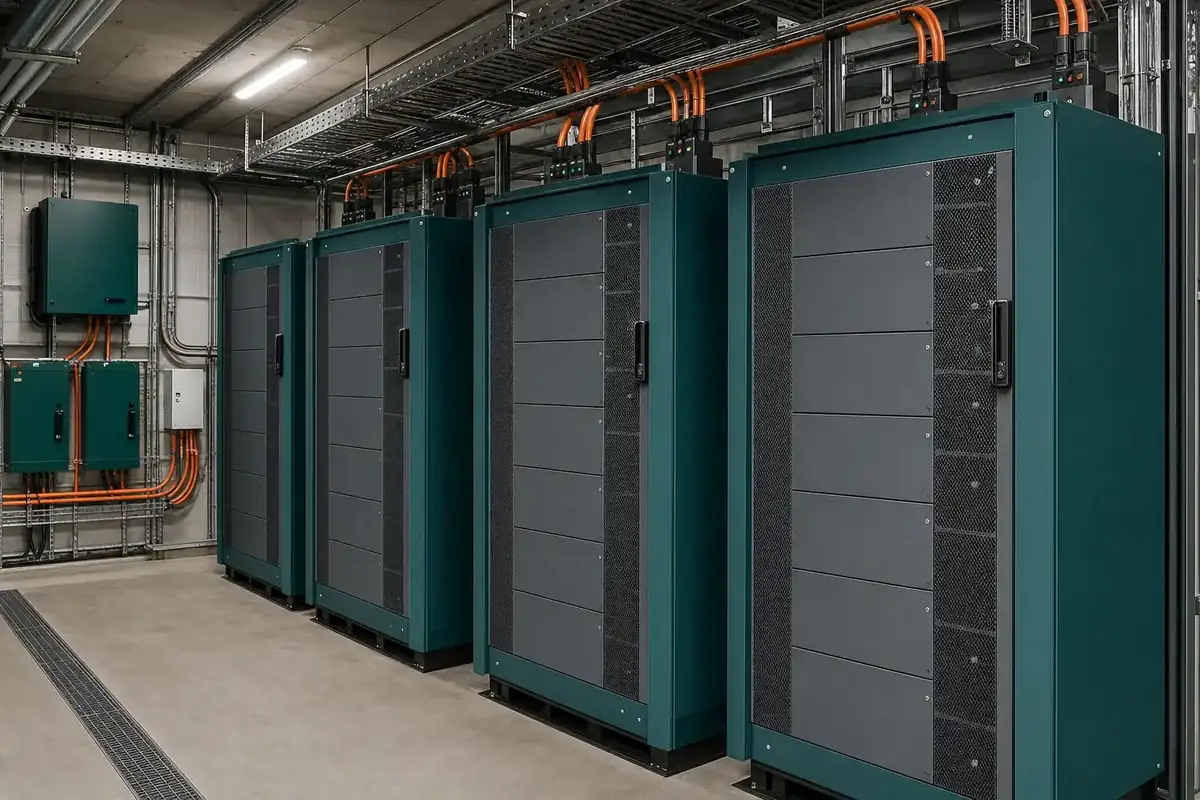
Commercial Battery Storage in Adelaide
Store daytime solar generation to slash peak-demand charges, shift load and add resilience to your Adelaide business.
 4.9Google rating328 reviews
Why it pays
The case for commercial battery storage

Peak demand charge reduction
The battery monitors your demand in real time and discharges to cap spikes before they hit the meter. Demand savings compound every billing cycle for the life of the system.

Time-of-use arbitrage
On time-of-use tariffs, the battery charges from solar or cheap overnight grid power and discharges during peak periods, capturing the tariff spread.

Backup power capability
Certain battery configurations can provide backup power during grid outages, keeping critical loads running. We specify the right inverter and transfer switch to support your backup requirements.
The numbers
What to expect
General characteristics. Specific product performance varies by manufacturer. Confirm technical specs with your project engineer.
| Factor | Lithium Iron Phosphate (LFP) | Lithium NMC |
|---|---|---|
| Cycle life (to 80% capacity) | 4,000-6,000+ cycles | 2,000-3,000 cycles |
| Thermal runaway risk | Very low | Moderate - needs active management |
| Energy density | Lower (larger footprint) | Higher (more compact) |
| Operating temperature range | Wide (-20 to 60 deg C) | Narrower, sensitive to heat |
| Typical commercial warrant | 10 years / 4,000 cycles | 5-7 years |
| Preferred application | Demand management, long-life cycling | Space-constrained sites |
Indicative figures. Your written proposal models your exact site.
Why it matters
Engineered for your site, not off the shelf
The system that pays back fastest is the one built around how you actually use power, not a bundle off a price list.
Off-the-shelf install
- A kW figure straight off a price list
- A standard panel + inverter bundle
- Roof filled regardless of your load
- Export you barely get paid for
- Installed, then forgotten
Our engineered approach
- Sized to your actual power bills
- Panels + inverter matched to your site
- Built to maximise self-consumption
- Battery + design to cut peak-demand charges
- Monitored and serviced by our own team
Thinking about commercial battery storage?
Get a free quote. We model the system, savings and payback before you commit to anything.
How we work
A clear path from enquiry to switch-on
Tariff and interval data review
We obtain 12 months of 30-minute interval data from your meter and identify your demand peaks, their timing and frequency. We map these against your tariff structure to quantify the demand charge.
Peak demand profiling
We model the top 10% of demand events to establish the target demand cap. The battery is sized to cover those events without being over-specified for events that rarely occur.
Solar generation integration
If a solar system is present or planned, we model how generation charges the battery during the day and reduces grid draw in the evening. The combined solar-plus-storage case changes the optimal battery size.
Discharge window and C-rate selection
We match the battery power output (kW) and energy capacity (kWh) to the duration and magnitude of your demand peaks. A battery that discharges too slowly will not cap the demand spike.
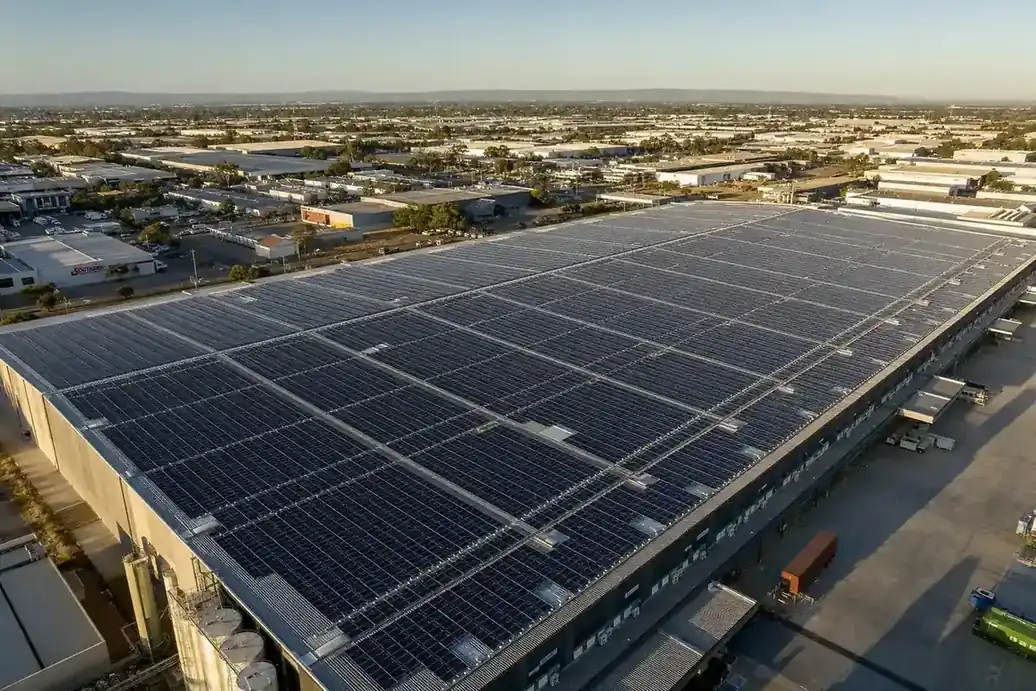
Adelaide & South Australia
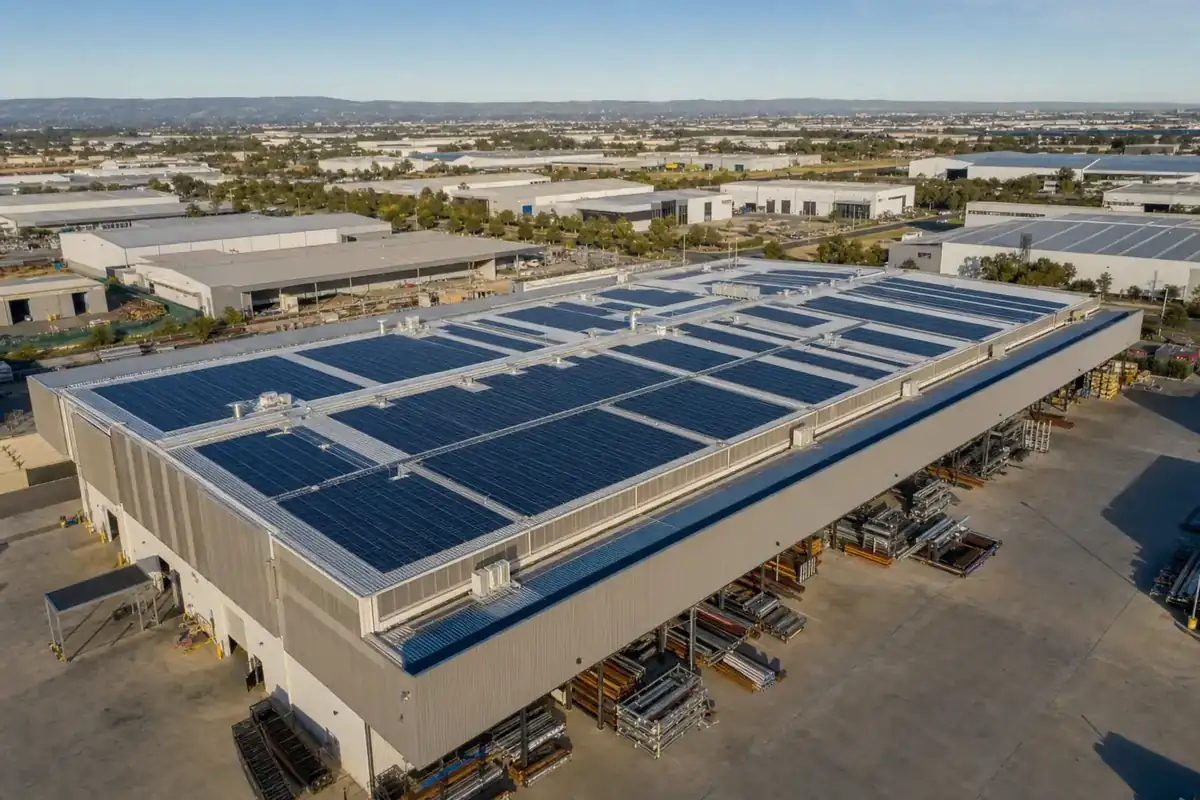
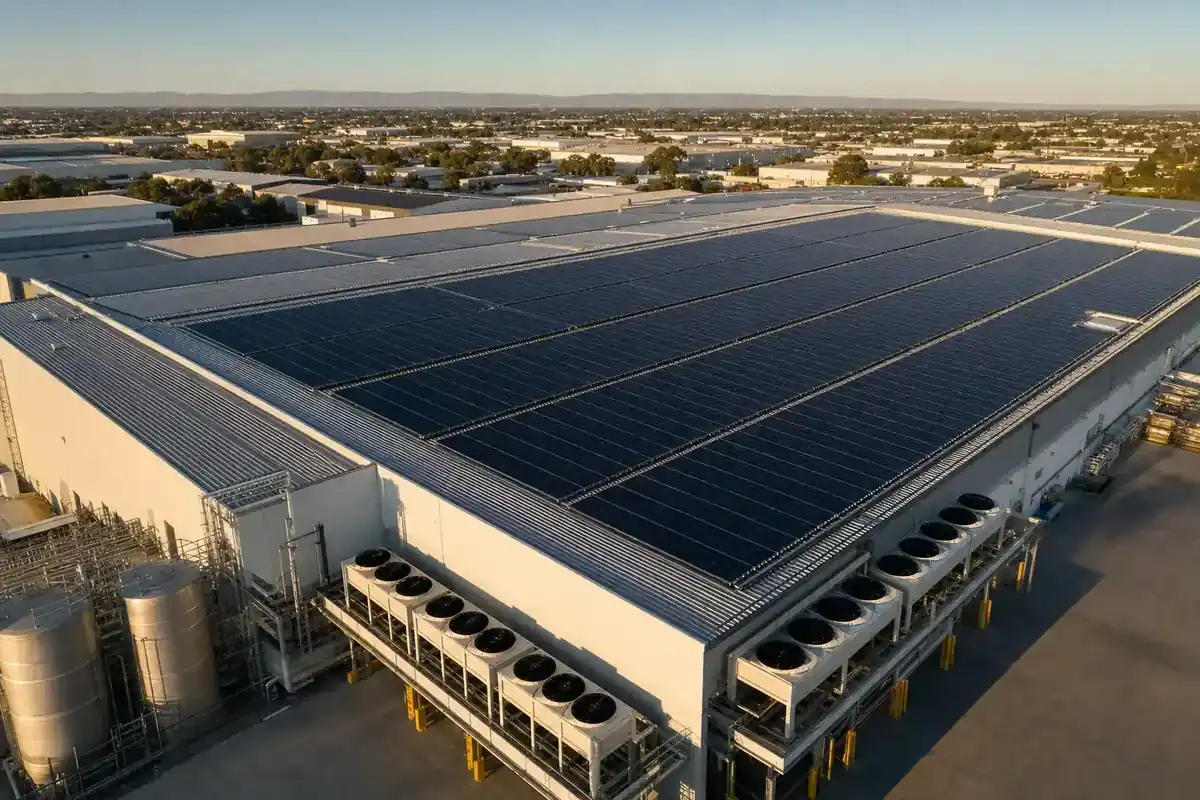
A commercial roof is a balance-sheet asset
Put the sun on your roof to work. We design, install and finance systems that pay for themselves and keep saving for decades.
End to end
Everything included, under one roof
In detail
The detail that matters
SA Network tariff structures create a strong case for commercial battery storage. Many medium-business tariffs have a demand component billed in dollar-per-kW for the highest 30-minute demand recorded in the billing period. A single large spike can inflate the bill for the entire month.
A battery system configured for demand management monitors the instantaneous load and injects energy the moment demand approaches the threshold. Over a full year, cutting 20-40kW of peak demand on a business paying $15-$25 per kW-month is a material dollar saving.
Two lithium chemistries dominate commercial battery storage in Australia. The right choice depends on your application, site conditions and safety requirements.
SA ambient temperatures can be extreme in summer. LFP chemistry is more tolerant of high temperatures and lower risk of thermal runaway, which is relevant for battery rooms in industrial buildings without dedicated air conditioning. We specify NMC when footprint is the primary constraint and a suitable housing and HVAC solution is in place.
A commercial roof is a balance sheet asset. A battery system is the working capital that makes that asset perform around the clock.
Commercial Solar Adelaide
Grid-forming versus grid-following inverters
Not all commercial battery systems provide backup power during a grid outage. A standard grid-tied battery inverter disconnects when the grid fails, which is a safety requirement. To provide backup capability, the system needs a grid-forming inverter and an automatic transfer switch that isolates a backup load panel from the main switchboard.
What loads can a commercial battery back up?
The battery capacity limits which loads can be backed up and for how long. Most commercial backup designs prioritise critical loads such as refrigeration, IT systems, lighting and security rather than the entire facility. We design the backup load panel and transfer switch as part of the battery project.
- Office IT and communications equipment
- Cold room and refrigeration compressors (critical for food businesses)
- Security and access control systems
- Emergency lighting circuits
- Process control systems where a shutdown causes product loss
A 100kWh battery running a 30kW backup load will last approximately 3 hours at full load. We model your critical load profile to calculate runtime and advise whether a diesel generator should be integrated for extended outages. Backup sizing must be agreed upfront - it determines the inverter and transfer switch specification.
The financial case for commercial battery storage depends almost entirely on your tariff structure. A business on a flat-rate tariff with no demand component will see a very different payback to one on a time-of-use tariff with a $20 per kW demand charge. Before we recommend a battery, we analyse your tariff in detail.
| Tariff Type | Demand Charge Component | Battery Benefit | Indicative Payback Range |
|---|---|---|---|
| Demand tariff with peak demand charge | Yes - typically $12-$25 per kW per month | High - battery caps demand spikes directly | 4-7 years (indicative) |
| Time-of-use with peak/off-peak rate differential | Possible - depends on retailer and network tariff class | Moderate to high - arbitrage captures tariff spread | 5-9 years (indicative) |
| Flat rate - single rate all hours | None | Low - no demand saving, minimal arbitrage opportunity | 10+ years or not viable |
| Combined demand plus time-of-use | Yes, plus peak/off-peak rate differential | Highest - battery earns on both mechanisms simultaneously | 3.5-6 years (indicative) |
If your demand peaks are infrequent, short in duration or spread evenly across the day rather than concentrated in a defined window, a battery may not reduce your demand charge materially. We model your actual demand profile against the proposed battery before recommending the investment. If the return is not there, we will tell you before you commit.
- Request the full tariff schedule from your retailer, including network charges, not just the retail energy rate on your bill
- Identify whether you are on a demand tariff and confirm exactly how peak demand is measured and billed by your network
- Check whether your network tariff class changes with your connection capacity, since upgrading for solar can shift you to a higher tariff class
- Ask your retailer about available tariff structures - many businesses remain on suboptimal tariffs that can be renegotiated at contract renewal
- Confirm whether your current retailer offers a time-of-use option and what the peak-to-off-peak rate differential is




Next step
See what this looks like on your roof
Send us your site details and recent power bills. We'll model the system, savings and payback and put real numbers in front of you, at no cost.
- Free feasibility assessment
- Transparent pricing and payback
- No obligation to proceed
Free quote
Want the numbers for your site?
We model system size, savings and payback before you commit to anything.
(08) 7093 6389FAQ
Frequently asked questions
Indicative installed costs for commercial LFP battery systems in Adelaide range from $80,000-$120,000 for a 100kWh system to $400,000-$600,000 for a 500kWh system. Costs depend on chemistry, enclosure type, installation complexity and whether backup capability is required. We provide a site-specific quote after reviewing your tariff and demand data.
Payback depends primarily on how much you can reduce your demand charge and whether you can capture time-of-use arbitrage. For SA businesses on demand tariffs with high peak demand, indicative payback is 4-8 years. We model your specific tariff and interval data before recommending a battery, so you see the projected return before committing.
No. A battery system can operate as a standalone demand management and grid arbitrage asset, charging from cheap off-peak grid power and discharging during expensive peaks. That said, the combination of solar generation charging the battery during the day and the battery discharging in the evening typically delivers the strongest financial return.
Quality LFP commercial batteries are warranted for 10 years or 4,000-6,000 full cycles, whichever comes first. At one cycle per day, that represents a battery life well beyond 10 years in most commercial demand management applications. Cycle life is reduced if the battery is regularly discharged below 20% state of charge.
Only if the system is designed for backup capability. A standard grid-tied battery disconnects during a grid outage for safety. Backup requires a grid-forming inverter, transfer switch and a dedicated backup load panel. We specify backup-capable configurations when backup is a requirement. There is a cost difference, and we will model both options.
LFP battery systems have minimal maintenance requirements compared to legacy chemistries. Typical annual maintenance includes visual inspection, terminal checks, firmware updates, cooling system filter cleaning and performance report review. We offer O&M contracts that include annual site visits and remote monitoring with fault alerts.
Start with the numbers, not a sales pitch.
Book a free feasibility assessment and we will model the system, savings and payback for your site before you commit to anything.