
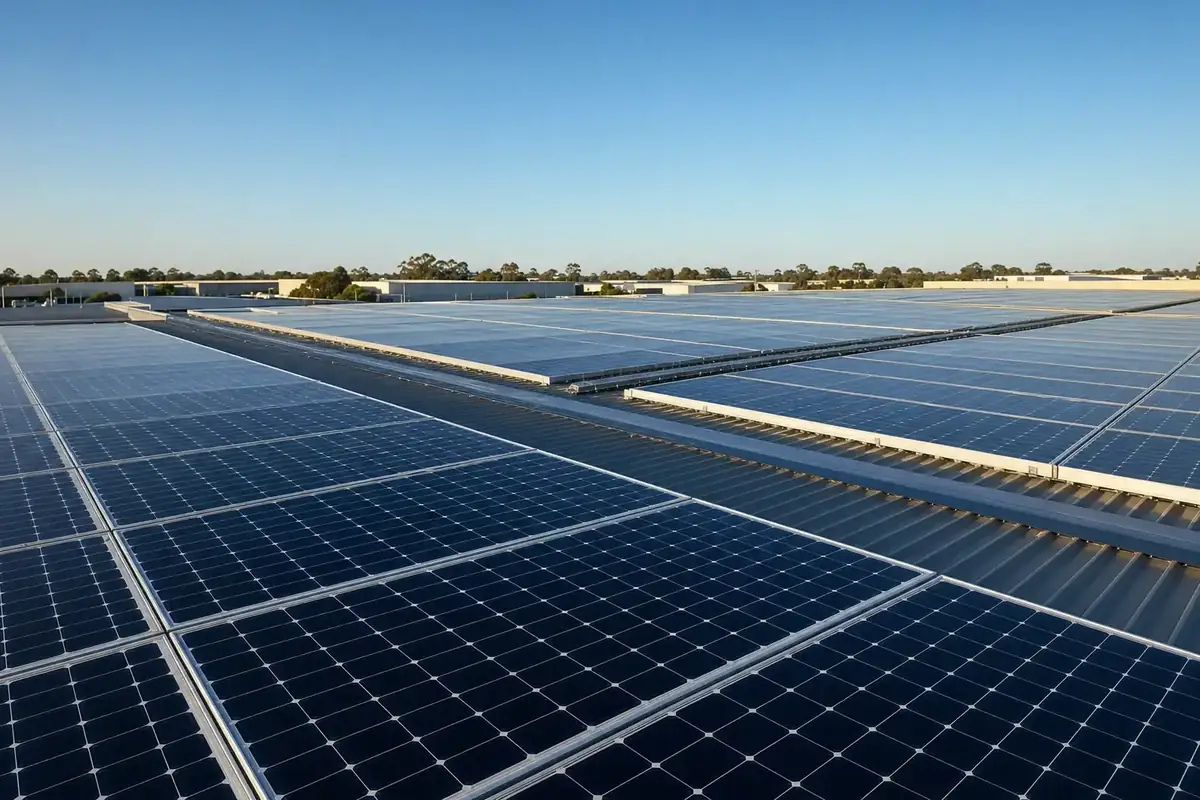
Commercial Solar Panels & Systems in Adelaide
Engineered rooftop PV from 30kW to 1MW+, designed around your actual load profile and costed before you commit.
 4.9Google rating328 reviews
Why it pays
The case for commercial solar panels & systems

Load-matched system design
We pull 12 months of interval data from your meter before sizing anything. The result is a system that maximises self-consumption and minimises grid exports.

SA grid rules compliance
Every installation is engineered to SAPN connection requirements, AS/NZS 5033 and the relevant network inverter standards, so your connection application moves without delays.

Tier-1 panels and inverters
We specify panels and inverters from manufacturers with bankable warranties and SA-stocked spare parts, protecting performance over the 25-year asset life.
The numbers
What to expect
Indicative figures for Adelaide metro, north-facing 15-degree pitch. Actual costs vary with roof structure, switchboard upgrades, network conditions and panel brand. STCs not deducted from figures above.
| System Size | Approx. Roof Area | Est. Annual Generation | Indicative Installed Cost |
|---|---|---|---|
| 30kW | 180-220 m2 | 42,000-48,000 kWh | $22,000-$35,000 |
| 100kW | 550-650 m2 | 140,000-160,000 kWh | $75,000-$110,000 |
| 250kW | 1,350-1,600 m2 | 350,000-400,000 kWh | $175,000-$250,000 |
| 500kW | 2,700-3,200 m2 | 700,000-800,000 kWh | $330,000-$470,000 |
| 1MW+ | 5,500 m2+ | 1,400,000+ kWh | Project-specific quote |
All pricing indicative only. Request a site-specific feasibility for accurate costings.
Why it matters
Engineered for your site, not off the shelf
The system that pays back fastest is the one built around how you actually use power, not a bundle off a price list.
Off-the-shelf install
- A kW figure straight off a price list
- A standard panel + inverter bundle
- Roof filled regardless of your load
- Export you barely get paid for
- Installed, then forgotten
Our engineered approach
- Sized to your actual power bills
- Panels + inverter matched to your site
- Built to maximise self-consumption
- Battery + design to cut peak-demand charges
- Monitored and serviced by our own team
Thinking about commercial solar panels & systems?
Get a free quote. We model the system, savings and payback before you commit to anything.
How we work
A clear path from enquiry to switch-on
Load data and site assessment
We pull 12 months of interval data from your AEMO meter and walk the roof, switchboard and substation. We are looking for usable roof area, structural capacity, shading, cable runs and network connection point.
Feasibility and system design
We model your load against the proposed array and calculate annual generation, self-consumption, grid export, payback period and 10-year cash flow. You see the numbers before any commitment.
Network connection application
We lodge the SAPN connection application, handle technical queries and track approval. For systems above 30kW this process typically takes 4-12 weeks depending on network capacity at your connection point.
Structural engineering and permits
For larger systems or older roof structures we commission a structural engineer to certify the mounting design. We manage all council or building consent requirements.
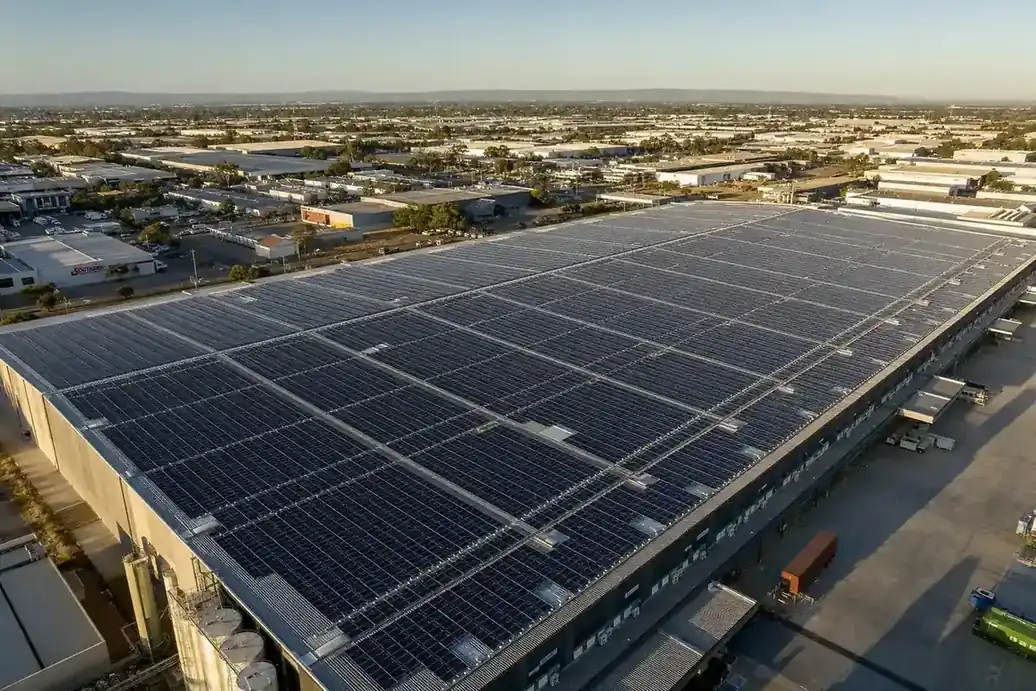
Adelaide & South Australia
A commercial roof is a balance-sheet asset
Put the sun on your roof to work. We design, install and finance systems that pay for themselves and keep saving for decades.
End to end
Everything included, under one roof
In detail
The detail that matters
Adelaide sits in one of the highest solar resource zones in the country. A north-facing commercial roof at 10-15 degrees generates close to the theoretical peak for the latitude, and even east-west split arrays on flat industrial roofs deliver strong annual yields.
SA business electricity rates are among the highest in Australia. That combination of high irradiance and high tariffs means the payback arithmetic for commercial solar is compelling - typically between 3.5 and 6 years on a cash-purchase basis, with useful system life exceeding 25 years.
Small-scale Technology Certificates reduce your upfront system cost based on system size and postcode. For a 100kW Adelaide installation, the STC discount is typically $15,000-$25,000 (indicative, varies with deeming period and STC spot price). We handle the paperwork and apply the rebate to your invoice.
The right system size depends on your daytime load, roof area, network connection capacity and budget. The table below shows indicative ranges for common Adelaide commercial scenarios.
What drives cost beyond panel count
- Switchboard and main switch upgrades to accommodate the new generation capacity
- Network connection application fees and any required SAPN augmentation works
- Roof structural engineering certification for older or lighter-gauge steel structures
- Metering upgrade to a bi-directional interval meter if not already installed
- Conduit runs from roof to switchboard, particularly on multi-storey or large-footprint buildings
Every kilowatt is costed before you commit. We will not hand you a proposal until the load data tells us the system will deliver the return we are modelling.
Commercial Solar Adelaide - project approach
Panel selection criteria
We specify panels from manufacturers with at least 10 years in production, Australian warranty support, and a product performance warranty of 80% or better at 25 years. We do not chase the lowest panel cost-per-watt at the expense of long-term performance data.
Inverter selection and SAPN requirements
SAPN requires inverters to comply with AS4777.2:2020 and have an approved model list (AML) listing. For systems above 30kW we typically specify string inverters in a distributed configuration or a central inverter with multiple MPPT inputs. Hybrid inverters are specified when battery storage is part of the design.
- String inverters: suited to 30kW-250kW rooftop arrays with moderate shading
- Central inverters: cost-effective at 250kW+ with uniform roof sections
- Hybrid inverters: battery-ready with integrated AC and DC coupling options
- Micro-inverters: module-level optimisation for complex multi-orientation roofs
Instant asset write-off and depreciation
Commercial solar systems are a depreciable plant and equipment asset. Subject to current ATO rules and your accountant confirming eligibility, the system cost may be deductible in the year of installation or depreciated over the effective life. Confirm the current threshold and your eligibility with your tax adviser before making investment decisions.
Feed-in tariff and export revenue
SA commercial feed-in tariffs are low relative to the cost of grid import. The financial case for a commercial system is built on self-consumption, not export. We size systems to maximise offset of your daytime load. For businesses with low daytime occupancy, battery storage can shift generation to peak consumption periods.
A business that self-consumes 80% or more of its solar generation will see payback periods at the shorter end of the indicative range. Businesses with a high overnight load and low daytime activity will see a lower self-consumption rate and should consider battery storage as part of the design.
Most Adelaide business owners arrive at a feasibility conversation with a shortlist of concerns that are rarely addressed in a standard proposal. The four questions below come up in almost every meeting and are worth resolving before you compare quotes.
| Question | The Practical Answer |
|---|---|
| What if we expand the facility or move premises? | A system designed for future expansion specifies inverters with spare MPPT inputs and a switchboard with room to grow. If you relocate, panels can be dismounted and reinstalled, though a new roof assessment and SAPN connection application are required at the new site. |
| What happens to the STC rebate if the deeming period changes? | STCs are calculated at the time of the signed installation contract. The deeming period affects the certificate count and therefore the point-of-sale discount. Locking in a contract before a deeming period reduction preserves the higher rebate. We advise on timing when the impact is material. |
| Who is responsible when the inverter fails after the warranty period? | Post-warranty inverter replacement is an O&M cost. We include the expected replacement cost in the 10-year cash flow model so your finance team can account for it. We also present extended warranty options at commissioning. |
| Can we still sell surplus power back to the grid? | Commercial feed-in tariffs in SA are low compared to the avoided cost of grid import. The financial model is built on self-consumption, not export. Export revenue is a secondary benefit, not the investment case. We confirm your approved export limit as part of the SAPN connection process. |
A quote that does not address these questions is likely based on generic assumptions rather than your specific load, roof and network situation. We will not produce a proposal without first completing the interval data review and site assessment. The numbers in a proposal are only as reliable as the data they are built on.
- Confirm the quote is built from your actual 12-month interval data, not a generic daily consumption assumption
- Check that the proposed inverter model appears on the SAPN approved model list for your connection capacity
- Verify that structural engineering certification is included or quoted separately for older or lighter-gauge roof structures
- Ask how the quoted self-consumption rate was calculated and what load profile assumption was used
- Confirm the STC calculation methodology and the deeming period applied to the rebate estimate
- Check that the quoted annual generation figure uses Adelaide postcode irradiance data, not a national average




Next step
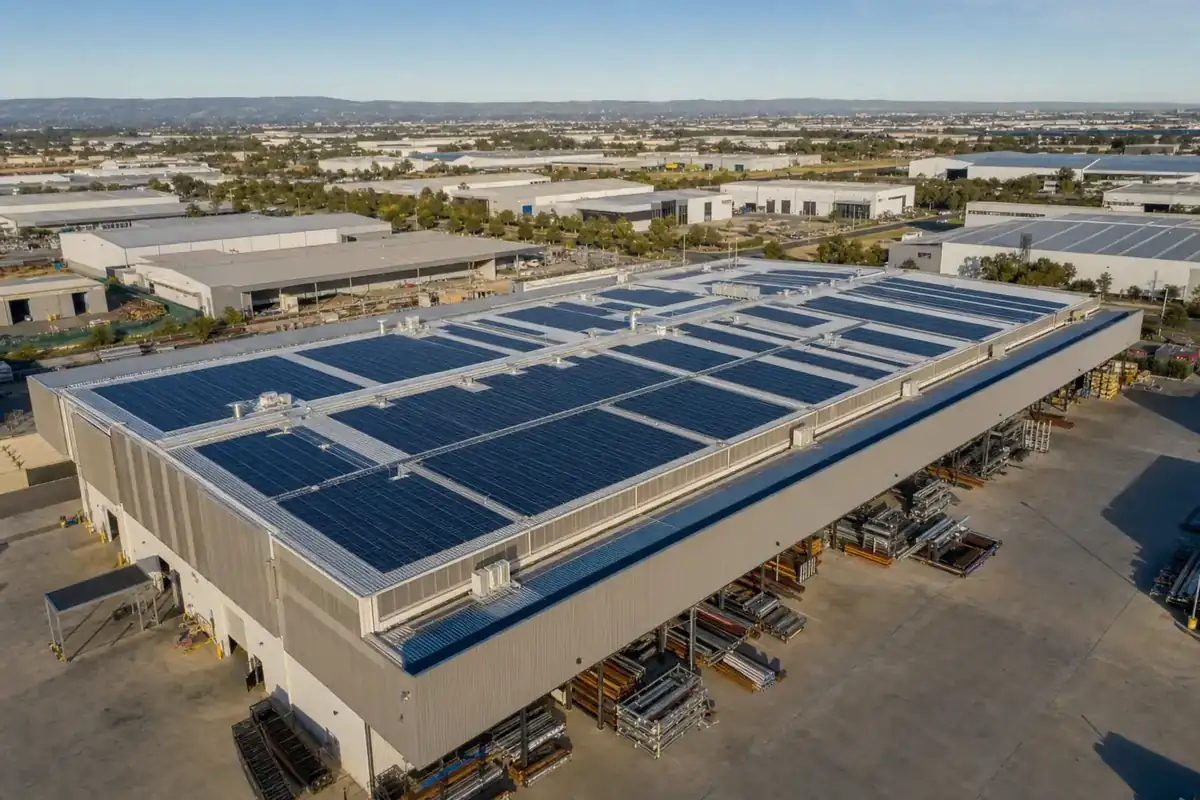
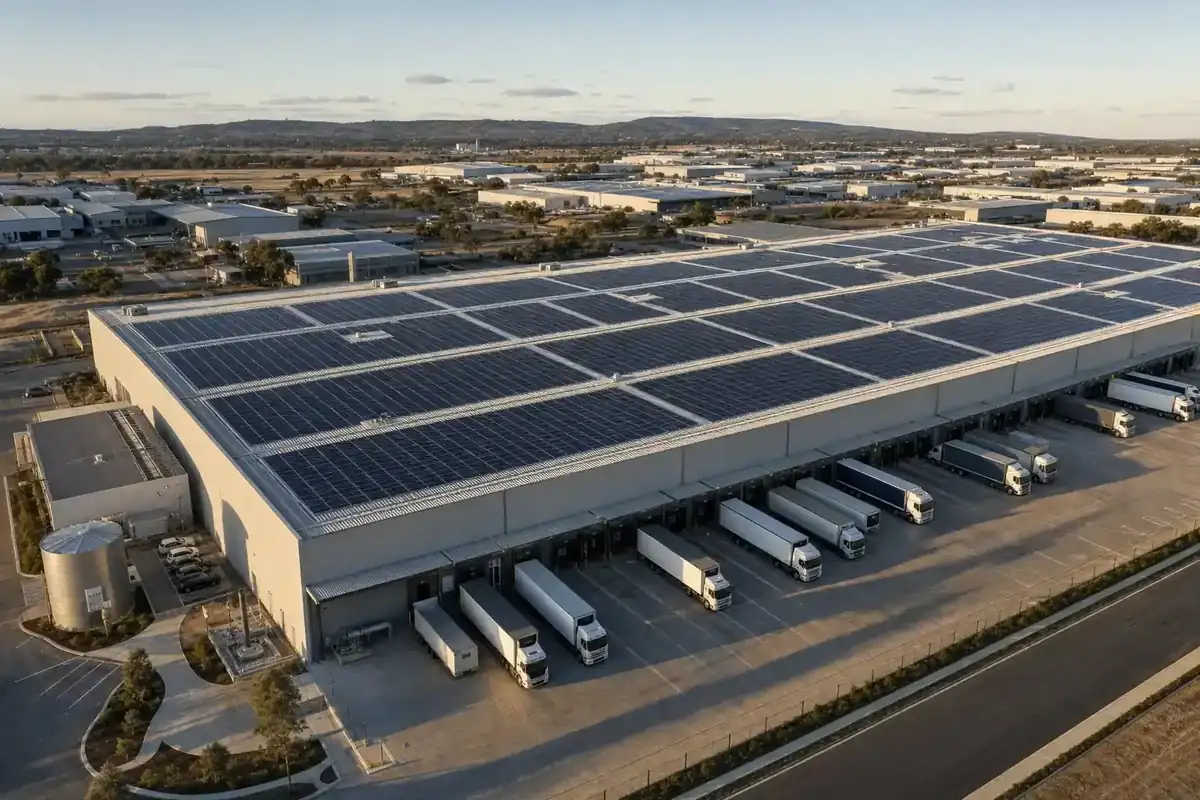
See what this looks like on your roof
Send us your site details and recent power bills. We'll model the system, savings and payback and put real numbers in front of you, at no cost.
- Free feasibility assessment
- Transparent pricing and payback
- No obligation to proceed
Free quote
Want the numbers for your site?
We model system size, savings and payback before you commit to anything.
(08) 7093 6389FAQ
Frequently asked questions
Indicative costs range from $22,000-$35,000 for a 30kW system to $330,000-$470,000 for a 500kW system, before STC incentives are applied. The STC rebate for a 100kW Adelaide system is typically $15,000-$25,000 (indicative). Every project has a different structural, electrical and network situation, so we provide a site-specific feasibility before quoting a final price.
From feasibility sign-off to commissioning, typical timelines are 6-14 weeks for systems up to 100kW and 12-24 weeks for larger projects. The longest variable is SAPN network approval, which can take 4-12 weeks for systems above 30kW. We submit the connection application early in the process to minimise delays.
Most commercial roofs in Adelaide, including colorbond steel, concrete tilt-up and membrane roofs, can accommodate solar. We assess load capacity, existing roof penetrations, drainage patterns and orientation during the site assessment. Roofs facing north or split east-west both work well. We commission a structural engineer when roof age or gauge requires certification.
Systems can be designed with future expansion in mind by specifying inverters with spare MPPT inputs and switchboard capacity for additional panels. If you expand the roof area later, we can assess whether the existing inverter can accept additional strings or whether a second inverter is needed.
The panels we specify carry a product warranty of 10-12 years and a performance warranty of 80% or better at 25 years. Inverter product warranties are typically 5-10 years with extension options. Our installation workmanship warranty covers the mounting, cabling and electrical work.
Yes. Most Adelaide businesses fund commercial solar through a commercial loan, equipment finance, chattel mortgage or a power purchase agreement (PPA). We work with a panel of finance providers and can model the cash flow under different structures. In most cases, a financed system generates positive cash flow from month one.
Start with the numbers, not a sales pitch.
Book a free feasibility assessment and we will model the system, savings and payback for your site before you commit to anything.