
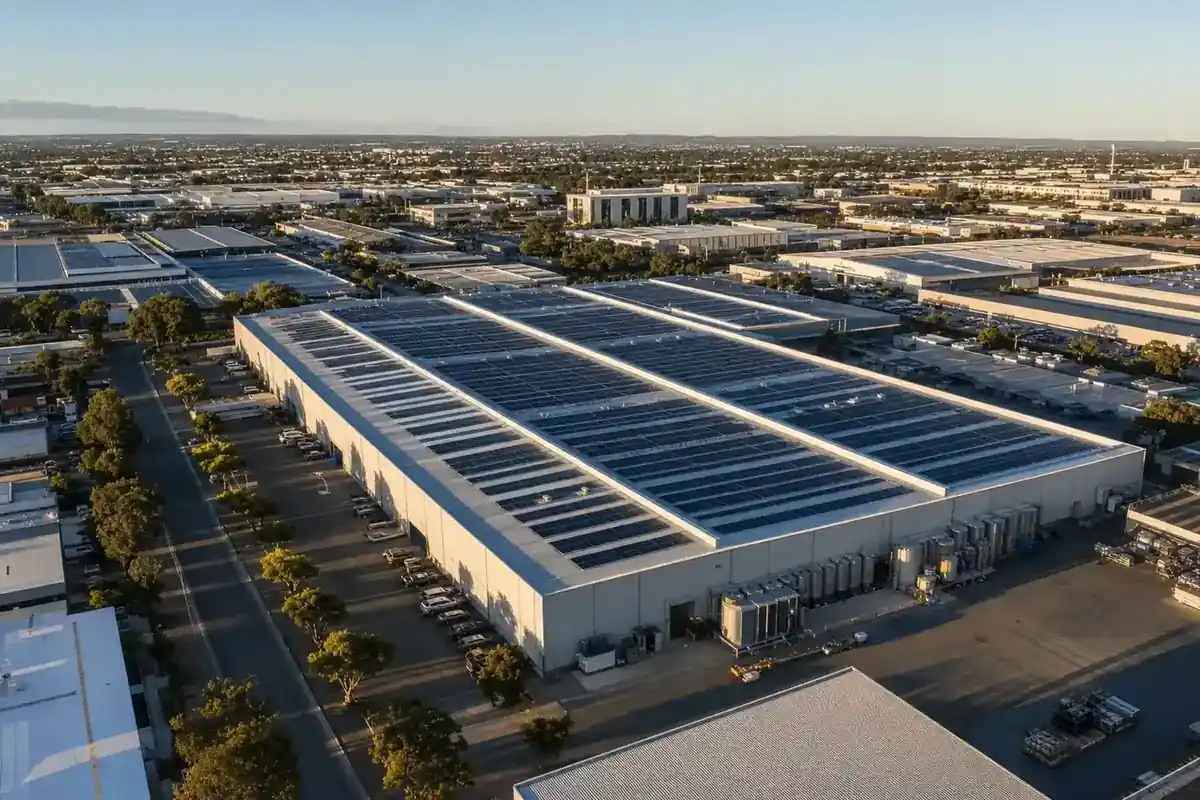
Commercial Solar Southern Adelaide
Powering Lonsdale logistics, Tonsley advanced manufacturing and Reynella industrial estates with engineered rooftop solar from 30kW to 500kW.
 4.9Google rating328 reviews
Local coverage
Commercial solar across Southern Adelaide
Southern Adelaide runs on industry. From Lonsdale Port's logistics hubs to Tonsley's advanced manufacturing precinct and the Reynella industrial corridor, the region's businesses carry some of the highest daytime energy loads in South Australia.
Those loads are exactly what rooftop solar is built for. A well-sized system at a Lonsdale cold-store or a Tonsley fabrication shed can displace 40 to 60 percent of grid consumption before midday, reducing demand charges as well as energy unit costs.
We design, supply and install commercial solar across all of Southern Adelaide's industrial zones. Every system is engineered to your actual load data, not a rule of thumb, and every quote includes a detailed payback and ROI projection.
Suburbs and precincts we cover
Local, not a call centre
A local team for Southern Adelaide, not a national hotline
When your system needs attention, it matters who actually picks up, and who turns up.
A national installer
- A 1800 number in another state
- Local installers subcontracted out
- A satellite 'design', no site visit
- Slow to respond when something's off
- Sized off a template
Us, on the ground in SA
- A South Australian team you can call
- We install and service it ourselves
- A real on-site inspection first
- Local, fast response
- Sized to your actual load
Get solar on your Southern Adelaide site
Get a free quote. We model the system, savings and payback before you commit to anything.
How it works locally
Getting solar on your Southern Adelaide site
Book a site visit
Tell us about your premises and send a recent power bill. We book a time that suits your operation.
On-site assessment
We inspect the roof, switchboard and metering on the ground, not from satellite imagery.
Costed proposal
You get a system sized to your load with transparent pricing, savings and payback for your site.
Local install & support
Our accredited team installs, commissions monitoring and services the system locally.
The numbers
What to expect locally
How rooftop solar interacts with typical SA commercial tariff components
| Tariff component | Solar impact | Saving mechanism |
|---|---|---|
| Energy charge (c/kWh) | Direct offset during daylight hours | Every kWh self-consumed avoids a grid purchase |
| Peak demand charge ($/kW/month) | Suppresses midday demand spike | Lowers the interval that sets the monthly demand peak |
| Daily supply charge ($/day) | Not reduced by solar | Fixed cost - unaffected by generation |
| Feed-in tariff (c/kWh exported) | Low return vs self-consumption | Maximise self-use; battery storage can capture excess |
Tariff structures vary by retailer and consumption tier. We model your specific tariff in every feasibility study.
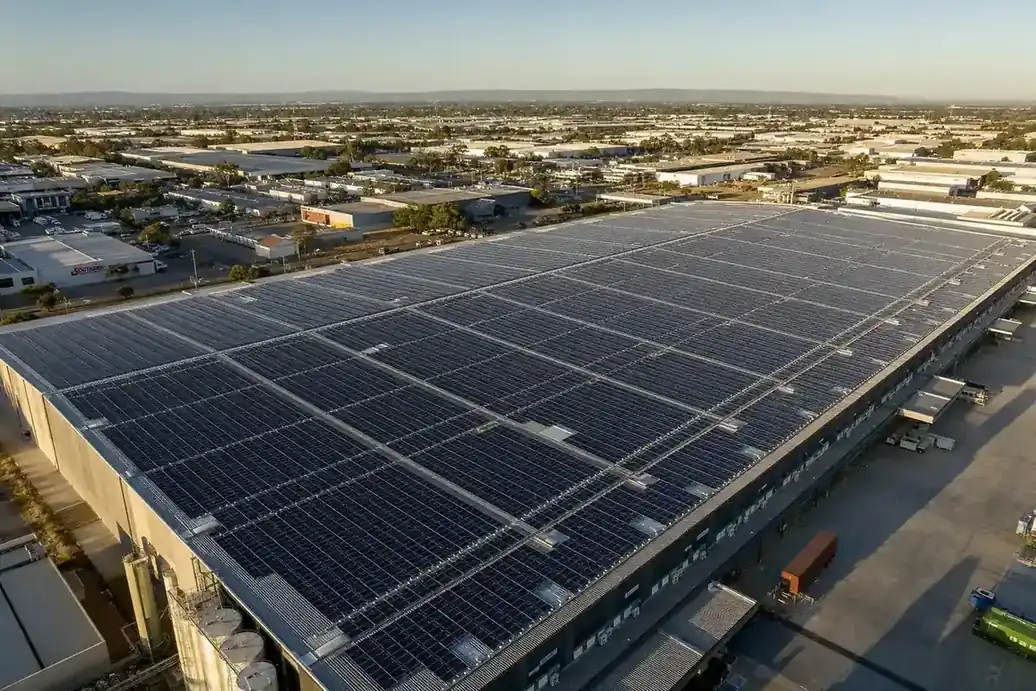
Why local business chooses us
Engineered commercial solar across metro Adelaide
Local knowledge, accredited installs and systems sized to how your business actually uses power.
On-site in Southern Adelaide
We come to your site
Every proposal starts with a real inspection across Southern Adelaide. We assess the roof, switchboard and load before designing anything.
(08) 7093 6389What we do here
Popular services in Southern Adelaide

Commercial Solar Panels & Systems
Engineered rooftop PV from 30kW to 1MW+, sized to your load profile.
Learn more
Commercial Battery Storage
Store daytime generation to slash peak-demand charges and add backup.
Learn more
Solar PPA & Financing
Zero-upfront power purchase agreements and finance that cash-flows from day one.
Learn moreLocal detail
Commercial solar in Southern Adelaide, in detail
South Australian business electricity tariffs rank among the highest in the OECD. For industrial and commercial customers in Southern Adelaide, a typical bill combines an energy charge, a peak-demand charge based on maximum kW draw, and a daily supply charge. The demand component alone can represent 20 to 35 percent of a quarterly bill for manufacturing sites.
Rooftop solar targets all three cost drivers simultaneously. Generating power during daylight hours reduces the energy units purchased from the grid. Because solar output naturally peaks around midday when industrial demand is highest, it also shaves the demand spike that drives the demand charge. The result is a compounding saving that improves year on year as grid tariffs continue to rise.
On many SA business tariffs, the demand charge is set by your single highest 30-minute interval in the billing period. A solar system sized to cover your midday peak can suppress that interval and save more than the energy units alone suggest. We model demand-charge impact in every feasibility study.
Load profiling before panel counts
The first step in any Southern Adelaide commercial solar project is a detailed load profile review. We pull 12 months of interval meter data from your distributor or directly from your NMI, map your consumption patterns by hour and season, and identify the generation profile that produces the highest self-consumption rate for your site.
Roof and structural assessment
Tonsley's converted former Mitsubishi plant and Lonsdale's purpose-built logistics sheds present very different structural profiles. We complete a physical roof inspection, check purlins and deck ratings, and confirm clearances around ridgelines and mechanical plant before a single panel is specified. This removes surprises during installation and ensures the system qualifies for finance.
Southern Adelaide is served by SA Power Networks as the electricity distributor. For commercial solar, SAPN manages the grid connection application, approves export limits and, for systems over 30kW, requires technical protection settings and a dedicated export control device. We manage this entire process as part of every installation.
For businesses on time-of-use tariffs, the economics improve further. SA's shoulder and peak pricing windows align closely with solar generation hours, so the avoided purchase cost per kWh is higher than a flat-rate tariff would imply. We factor this into every Southern Adelaide system proposal.
Lonsdale: port logistics and cold chain
Refrigeration loads in Lonsdale cold-store facilities run continuously, but compressor cycling creates demand spikes that are expensive under time-of-use tariffs. A rooftop array sized to the daytime compressor load, paired with a battery to manage evening cycling, can cut energy costs substantially. We have scoped and delivered systems across the Lonsdale industrial precinct.
Tonsley: advanced manufacturing and technology precinct
Tonsley's redevelopment has attracted precision manufacturing, cleantech firms and TAFE SA operations to former Mitsubishi-era buildings. These facilities often have large flat or low-pitch roofs with excellent solar exposure and relatively stable daytime loads, making them strong candidates for 100kW to 300kW systems.
Reynella: established industrial estates
Reynella's older industrial estates include a wide range of commercial users, from trade suppliers and automotive services to food manufacturing and distribution. Roof ages and structural specifications vary, and we assess each site individually. Many Reynella buildings are strong candidates for ballasted installations on flat-roof sections.
Every kilowatt is costed before you commit. We model payback, IRR and avoided cost in every Southern Adelaide feasibility study so you are buying an engineered investment, not a sales pitch.
Commercial Solar Adelaide
- Logistics and warehousing: large flat roofs, high daytime electricity use, strong solar match
- Food manufacturing and cold chain: continuous loads with demand-charge exposure
- Advanced manufacturing at Tonsley: technology-ready tenants, often metered separately
- Automotive trade and services: moderate loads, good roof area, 5 to 7 year payback typical
- Trade retail and distribution: mid-tier loads, often well-suited to 30 to 100kW systems
Australian businesses installing commercial solar under 100kW can access small-scale technology certificates (STCs) under the federal Renewable Energy Target scheme. These certificates are created at the point of installation and applied as an upfront discount on system cost. The STC value is set by the federal deeming period remaining and the system's rated output, and we include the current STC discount in every quote.
Systems over 100kW participate in the large-scale generation certificate (LGC) scheme rather than the STC scheme. For larger Lonsdale or Tonsley installations, we model the LGC revenue stream as part of the financial case and assist in setting up accreditation with the Clean Energy Regulator.
Federal instant asset write-off provisions have historically allowed eligible businesses to immediately deduct the cost of depreciable assets, including solar systems. Eligibility thresholds and dates change each budget cycle. Confirm with your accountant whether your Southern Adelaide installation qualifies under the current rules before committing to a financial year of purchase.
Finance options for Southern Adelaide businesses include chattel mortgage, commercial lease and power purchase agreements. A PPA structures the project so a third party funds and owns the system and you purchase the electricity it generates at a fixed rate below your current grid tariff. We can refer qualified finance brokers and PPA providers as part of the project scoping process.
Next step
Book your Southern Adelaide assessment
Tell us about your site and we'll model the system, savings and payback before you commit to anything.
- Free on-site assessment
- Transparent pricing and payback
- Local install team
Other areas we serve
Free quote
Want the numbers for your site?
We model system size, savings and payback before you commit to anything.
(08) 7093 6389FAQ
Frequently asked questions
The right size depends on your interval meter data, not your roof area. Lonsdale logistics and cold-store sites typically have continuous daytime loads that support systems from 100kW to 300kW. We pull your NMI interval data in the feasibility stage to model the system size that maximises self-consumption and financial return.
SA Power Networks manages distribution-level grid connection for all Southern Adelaide commercial installations. Systems over 30kW require a formal connection application, technical protection settings and export limit approval. We handle all SAPN documentation and correspondence as part of every installation project.
Many can, but it requires a structural inspection first. Older steel-frame buildings in Reynella often have adequate purlin ratings for modern lightweight panels. Where load capacity is marginal, ballasted flat-roof mounting or a carport structure can provide an alternative. We assess every site before committing to a design.
For well-sized C&I systems in Southern Adelaide, payback typically falls in the 5 to 9 year range depending on system size, tariff structure, self-consumption rate and whether the site is on a demand tariff. Businesses with high daytime demand and exposure to peak demand charges tend to achieve the faster end of that range.
Yes, provided the lease arrangement permits rooftop improvements and the landlord is willing to engage. Tonsley's newer buildings generally have strong structural ratings. For tenants, we can structure PPA arrangements that avoid capital outlay while locking in below-tariff electricity rates for the lease term.
Start with the numbers, not a sales pitch.
Book a free feasibility assessment and we will model the system, savings and payback for your site before you commit to anything.