
Written by the Commercial Solar Adelaide team
Reviewed by our CEC-accredited commercial solar specialists
South Australia's electricity market creates specific conditions where commercial battery storage can stack multiple revenue streams. This article examines when a battery genuinely improves the business case and when it does not.
AI Overview
Commercial battery storage in South Australia earns its keep through three stacked value streams: absorbing surplus solar generation that would otherwise export at low feed-in rates, reducing peak demand charges on network tariffs, and shifting grid consumption to cheaper off-peak periods. SA businesses on demand-based tariffs with significant peak demand charges often see battery payback compress to 5-8 years when all three streams are modelled together. The key question is whether your tariff structure actually includes a demand charge component - without it, the battery economics are weaker and the case rests primarily on arbitrage and backup value.
Key takeaways
- SA commercial tariffs often include a demand charge component - battery storage directly reduces this
- Three value streams stack: solar capture, demand reduction, time-of-use arbitrage
- Indicative commercial battery cost: $900-$1,400/kWh installed in SA (2026)
- Without a demand charge tariff, battery economics are significantly weaker
- Battery payback standalone is typically longer than solar alone - the case is strongest as a solar addition
- Virtual Power Plant participation in SA can add another revenue layer - ask your installer about current programs
What Commercial Battery Storage Actually Does
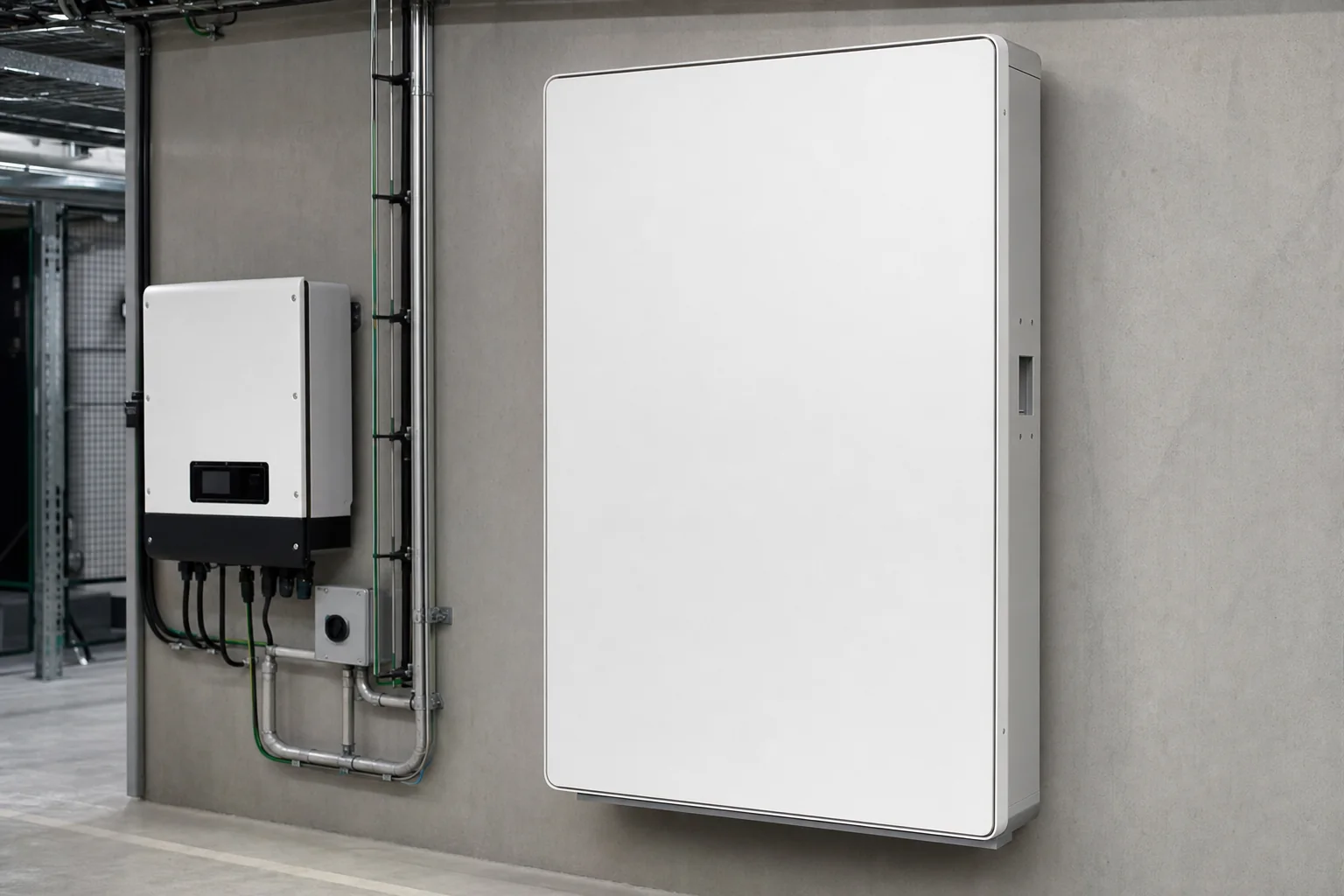
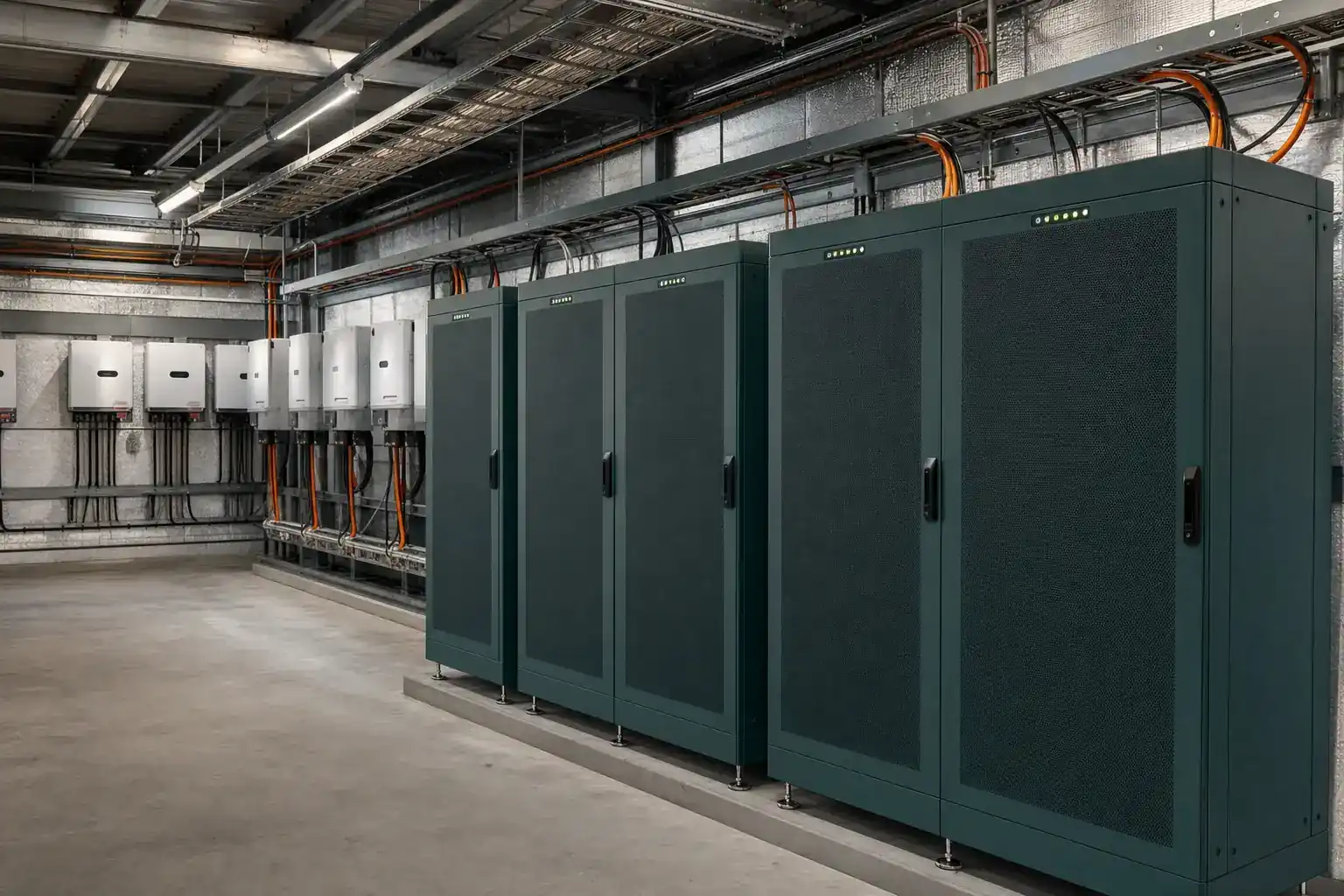
A commercial battery system stores energy - either from your solar array or from the grid during cheap rate periods - and discharges it when electricity is most expensive, most needed, or when demand charges would otherwise spike. It is not a standalone product; it is an optimisation layer on top of your energy supply.
For Adelaide businesses, three use cases determine whether the economics stack up: capturing surplus solar that would otherwise export at low feed-in rates, reducing peak demand charges on your network tariff, and shifting grid imports from peak to off-peak rate periods where your tariff is time-of-use structured.
- 01Solar capture
Excess solar generation that cannot be consumed on-site is stored in the battery instead of exported at $0.04-$0.08/kWh. The stored energy is then used in the evening, displacing grid electricity worth $0.25-$0.40/kWh.
- 02Peak demand reduction
The battery discharges during periods when your site would otherwise draw heavily from the grid, suppressing the peak demand measurement that determines your network demand charge.
- 03Time-of-use arbitrage
On a time-of-use tariff, the battery charges from the grid during off-peak periods (lower rate) and discharges during peak periods (higher rate), capturing the rate differential.
- 04Backup power (resilience)
Many commercial batteries can provide essential load backup during grid outages. This is not a financial return but a risk-management benefit that has real value for businesses with critical operations.
- 05VPP participation
Some SA businesses with commercial batteries participate in Virtual Power Plant programs, earning additional revenue by allowing the aggregator to dispatch the battery during grid events. Availability and terms change frequently - ask your installer about current SA programs.
SA Network Tariffs and the Demand Charge Opportunity
South Australia Power Networks (SAPN) charges most large commercial customers a demand component on their network tariff. This charge is based on your maximum power draw over a defined measurement period - typically the highest 30-minute average interval in the billing month.
The critical point about demand charges: they are set by a single peak event. Your business could consume electricity efficiently for 27 days, have one equipment startup or oven preheating event that spikes demand on day 28, and pay an elevated demand charge for the entire month based on that one event.
Look at your electricity invoice and network charges section. If you see a line item described as 'demand charge', 'capacity charge', 'kVA charge' or similar measured in kW or kVA with a $/kW or $/kVA rate, you are paying a demand charge. Pull your last 12 months of invoices to understand what your peak demand measurement typically is and what it is costing you.
Want the numbers for your own site?
We model system size, savings and payback before you commit to anything.
Indicative Commercial Battery Costs in South Australia
Commercial battery storage costs have fallen significantly over the past five years but remain a material capital item. Pricing depends on the battery technology, usable capacity, inverter configuration and installation complexity.
| Usable Capacity | Technology | Indicative Installed Cost (ex-GST) | Typical Application |
|---|---|---|---|
| 30-50kWh | LFP lithium | $35,000-$65,000 | Small commercial, demand shaving |
| 100kWh | LFP lithium | $100,000-$140,000 | Medium commercial, full day shift |
| 200kWh | LFP lithium | $185,000-$260,000 | Large commercial, multi-use |
| 500kWh | LFP lithium | $420,000-$600,000 | Industrial, grid services eligible |
| 1MWh+ | LFP / flow | Quoted per project | Precinct, VPP anchor, industrial |
All figures exclude GST and exclude any applicable government incentive programs. Battery pricing continues to fall - confirm current pricing at time of quotation.
When the Battery Business Case Stacks Up
Battery storage earns its strongest returns where multiple value streams are accessible simultaneously. Businesses where only one value stream applies typically see longer payback periods.
- You already have solar (or are installing it) and have surplus generation that currently exports at low FiT rates
- Your network tariff includes a demand charge component, and your peak demand is materially higher than your average demand
- Your tariff has meaningful time-of-use rate differentials between peak and off-peak periods
- You have critical operations that benefit from backup capability during grid outages
- You are in a position to participate in SA VPP programs (check current availability)
A battery installed without solar relies solely on time-of-use arbitrage and demand reduction - it has no solar capture value stream. For most Adelaide commercial sites, the business case for a battery installed without solar is marginal. The strongest commercial battery case is almost always as an addition to an existing or co-installed solar system.
A commercial roof is a balance sheet asset. A battery behind the meter is the optimisation layer that extracts the remaining value the solar system could not reach on its own.
Battery Storage Payback: Indicative Scenarios
| Scenario | Battery Size | Annual Value Created (Indicative) | Payback (Indicative) |
|---|---|---|---|
| Solar capture only, flat tariff | 50kWh | $3,000-$5,000 | 10-18 years |
| Solar capture + TOU arbitrage | 100kWh | $8,000-$14,000 | 8-14 years |
| Solar + demand reduction (medium site) | 100kWh | $12,000-$22,000 | 5-9 years |
| Solar + demand + TOU + VPP (high value site) | 200kWh | $30,000-$55,000 | 4-7 years |
VPP revenue depends on program availability, terms and dispatch frequency at time of participation. Confirm current SA VPP programs with your installer.
The difference between a 10-year and a 5-year battery payback is almost always the difference between accessing one value stream versus three. Work with an installer who models all applicable value streams for your specific site and tariff before recommending a battery size.
Explore our commercial solar services
About Commercial Solar Adelaide
We design, install and finance commercial solar and battery systems across Adelaide and regional South Australia, built around your load profile and costed before you commit. Our guides are written and reviewed by our accredited team.
How we put this together
Figures in this guide are indicative and based on typical South Australian commercial tariffs, yields and system pricing at the time of writing. Every project is different, so treat these as a starting point, not a quote. For rebate, tax or finance questions, confirm the current detail with the relevant scheme and your accountant.