
Written by the Commercial Solar Adelaide team
Reviewed by our CEC-accredited commercial solar specialists
Most Adelaide businesses are quoted a per-kW price and little else. This guide breaks down every cost component, what drives the total, and what a realistic budget looks like for systems from 30kW to 500kW.
AI Overview
Commercial solar in Adelaide typically costs between $700 and $1,100 per kW installed (2026 indicative figures), with total system price heavily influenced by roof complexity, switchboard condition and grid connection requirements. Small Technology Certificates (STCs) reduce upfront cost by offsetting a portion of the price, though the scheme phases down annually until 2030. For most SA businesses, GST is fully reclaimable, making the real net cost materially lower than the quoted figure.
Key takeaways
- Indicative installed cost: $700-$1,100/kW for commercial systems in SA (2026)
- A 100kW system typically costs $85,000-$110,000 before STC rebate and GST recovery
- STCs reduce upfront cost but phase down each year until 2030
- GST-registered businesses reclaim the full GST component on their BAS
- Grid connection and switchboard upgrades can add $5,000-$30,000 depending on your site
- The per-kW price drops as system size increases - buying in scale pays
The Real Cost Components Behind a Commercial Solar Quote
A commercial solar quote is not one number. It is a bundle of six or seven distinct cost lines, each driven by different variables. Understanding what sits behind the total lets you compare quotes properly and spot the ones that have left something out.
The biggest single line is usually the panels and inverter equipment. After that comes installation labour, roof mounting hardware, AC and DC cabling, monitoring, switchboard upgrades and the distributor connection application. On complex sites, civil or structural engineering adds another line.
| Cost Component | Typical Range (Indicative) | Notes |
|---|---|---|
| Solar panels (supply) | $0.30-$0.50/W | Tier-1 modules, 400-680W per panel |
| Inverter(s) (supply) | $0.08-$0.18/W | String or central inverter; size-dependent |
| Mounting and racking | $0.06-$0.14/W | Roof type drives this up or down |
| AC and DC cabling | $0.05-$0.12/W | Distance from array to switchboard matters |
| Installation labour | $0.10-$0.18/W | Roof access, panel count, crew days |
| Monitoring system | $500-$3,000 | Site meter, data logger, cloud platform |
| Switchboard upgrades | $2,000-$15,000 | Only if current board cannot accept export |
| Grid connection (SAPN) | $1,500-$25,000+ | Depends on system size and feeder capacity |
Ranges reflect variation in site complexity, roof type and equipment tier. All figures exclude GST.
SA Power Networks assesses each commercial connection individually. A 30kW system on a large feeder near a substation may cost under $3,000 to connect. A 250kW system at the end of a rural spur may require protection upgrades costing $20,000 or more. Always get the SAPN connection quote in writing before committing to a system.
Indicative Installed Costs by System Size
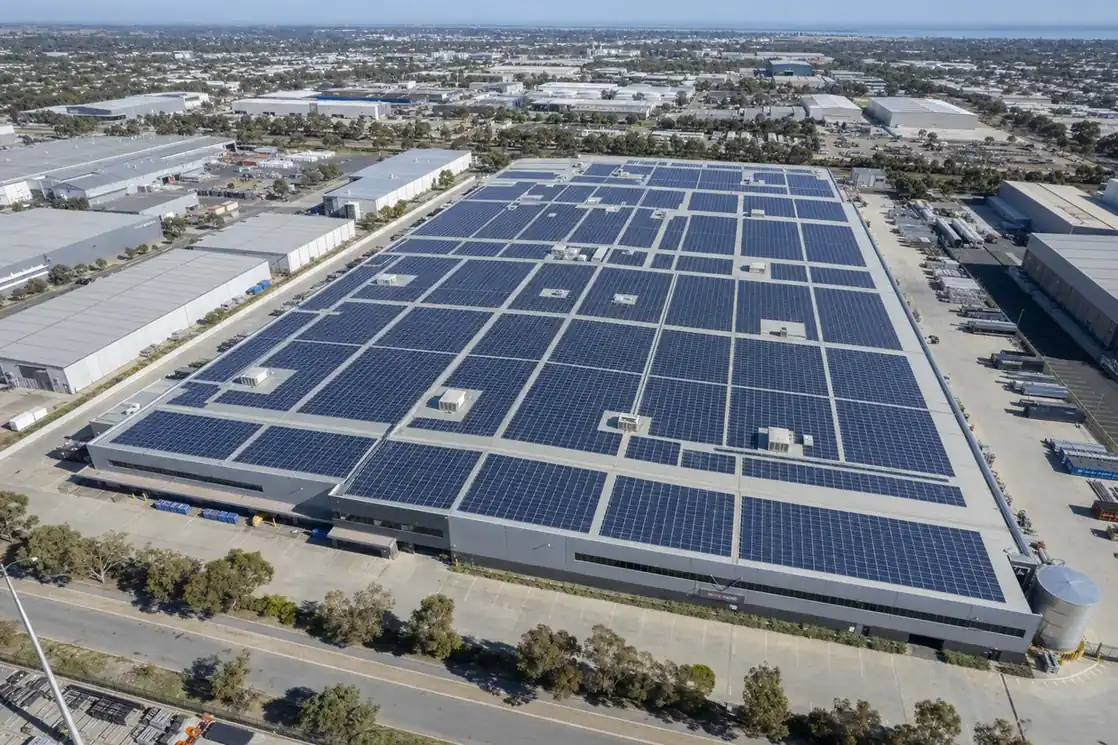
The all-up installed price per kW falls as system size increases. Larger systems spread the fixed costs of mobilisation, connection applications and monitoring over more kilowatts, improving unit economics.
| System Size | Indicative Installed Cost (ex-GST) | After STC Offset (Indicative) |
|---|---|---|
| 30kW | $28,000-$40,000 | $21,000-$31,000 |
| 50kW | $45,000-$62,000 | $34,000-$49,000 |
| 100kW | $80,000-$110,000 | $62,000-$88,000 |
| 200kW | $148,000-$200,000 | $118,000-$163,000 |
| 500kW | $340,000-$470,000 | $275,000-$390,000 |
All figures are indicative only. Your written quote is the only accurate reference for your specific site.
The Small Technology Certificate scheme that reduces upfront solar cost runs until 31 December 2030. Each January, the deeming period shortens by one year, reducing the STC benefit. Locking in your system sooner captures more of the rebate. Confirm the exact deeming period with your installer at the time of signing.
Want the numbers for your own site?
We model system size, savings and payback before you commit to anything.
How GST Affects the Real Cost for Businesses
Every commercial solar quote includes GST unless specifically stated otherwise. For GST-registered businesses, this is not a real cost. You claim the full GST component back on your next BAS, typically within 28 days of lodging.
On a $100,000 system (ex-GST), the invoiced amount is $110,000. The $10,000 GST is reclaimed on your BAS. The capital cost you are genuinely out-of-pocket for is $100,000 minus the STC rebate. This distinction matters when modelling payback.
How the system is depreciated, whether you use instant asset write-off provisions (if applicable at the time of purchase), and how STC income is treated are questions for your accountant or tax adviser, not your solar installer. We can provide your accountant with the system specifications and cost breakdown to support that assessment.
What Drives Cost Up: the Factors That Add to the Base Price
Two systems of identical kilowatt capacity can differ by 30-50% in total installed cost depending on site conditions. Understanding these variables early prevents budget surprises.
- Roof type: a complex pitched metal roof costs more to mount on than a flat concrete roof with ballast mounts
- Roof condition: reroofing work required before installation adds cost outside the solar scope
- Switchboard age: older boards with limited spare capacity require upgrades to accept the solar feed
- Distance from array to switchboard: longer cable runs add material and labour cost
- Height and access: multi-storey buildings or roofs requiring elevated work platforms add mobilisation cost
- Single-phase vs three-phase supply: three-phase sites are generally simpler to connect at higher capacity
- Export limit requirements: SAPN may impose zero-export or export-limited connections in congested areas
- Asbestos roof sheeting: requires licensed asbestos management plan before any work can proceed
A commercial roof is a balance sheet asset. The cost to prepare it properly is part of the investment, not an inconvenience.
Hidden Costs That Quotes Sometimes Omit
Not every quote covers the same scope. Before comparing totals, check that each quote explicitly includes these items or has noted them as exclusions with a separate allowance.
- 01Grid connection application (SAPN)
The distributor application fee and any works SA Power Networks requires are sometimes quoted separately. Confirm whether the quote includes the full connection cost or only the application fee.
- 02Switchboard upgrades
An older single-phase switchboard being upgraded to accept a large three-phase inverter feed can cost $5,000-$15,000. Confirm this is included or excluded in the price you are comparing.
- 03Metering changes
A new import-export meter is required for grid-connected solar. Your energy retailer organises this but there may be a metering charge. Check who bears this cost.
- 04Structural engineering
Some councils or building surveyors require a structural engineer to certify the roof can carry the panel load. This fee is typically $1,500-$4,000 and is sometimes excluded from base quotes.
- 05Monitoring platform subscription
Some installers include 12 months of monitoring then charge an annual fee. Others include it for the system life. Confirm what ongoing monitoring costs you will carry.
How to Read and Compare Quotes
A low headline price can hide a smaller system, cheaper equipment or excluded scope. Comparing quotes on a per-kW basis only tells part of the story. Compare on total kilowatt-hours generated per year (the performance estimate) versus total all-in cost.
Ask every installer for a site-specific performance model that shows estimated annual generation in kWh, estimated self-consumption percentage, estimated export to the grid, and the resulting annual bill savings. This turns a hardware comparison into an investment comparison.
Do not ask 'what is the cheapest price per kW?' Ask 'what is the cost per kWh of energy produced over 25 years, including all installation, connection and maintenance costs?' That number separates engineering-led commercial installers from those selling panels by the pallet.
Explore our commercial solar services
About Commercial Solar Adelaide
We design, install and finance commercial solar and battery systems across Adelaide and regional South Australia, built around your load profile and costed before you commit. Our guides are written and reviewed by our accredited team.
How we put this together
Figures in this guide are indicative and based on typical South Australian commercial tariffs, yields and system pricing at the time of writing. Every project is different, so treat these as a starting point, not a quote. For rebate, tax or finance questions, confirm the current detail with the relevant scheme and your accountant.